




Key Characteristics of Fiber Optic Adapters: Enabling Seamless Optical Connectivity
Fiber optic adapters, often referred to as couplers or mating sleeves, are fundamental passive components in any optical network. Their primary function is to provide a precise, secure, and low-loss connection between two fiber optic connectors of the same or sometimes different types. While seemingly simple, the performance of the entire link hinges on the quality and characteristics of these adapters. Below are the primary characteristics that define high-performance fiber optic adapters.
1. Precision Alignment and Low Insertion Loss
The most critical characteristic is the adapter's ability to align the ceramic (or sometimes metal) ferrules of two connectors with micron-level accuracy.
- Core Component: This is achieved through an internal precision alignment sleeve, typically made from zirconia ceramic, phosphor bronze, or polymer. Zirconia sleeves are most common due to their exceptional hardness, smooth surface, and excellent thermal stability.
- Key Metric: The primary performance indicator is Insertion Loss (IL), which measures the signal power lost at the connection point. High-quality adapters consistently achieve very low insertion loss, typically < 0.2 dB, ensuring maximum signal strength is maintained across the link.
2. High Return Loss (Low Reflectance)
Return Loss (RL) measures the amount of light reflected back toward the source, which can cause signal interference and degrade transmitter performance.
- Flat Physical Contact (PC) & Angled Physical Contact (APC): Standard adapters for UPC connectors minimize back reflection. For applications requiring ultra-low reflectance (e.g., CATV, FTTx), APC adapters are used. These incorporate an 8-degree angled endface within the sleeve, directing any reflected light out of the fiber core, achieving a return loss of >65 dB.
3. Excellent Durability and Mechanical Stability
Adapters must withstand repeated mating cycles, environmental stress, and physical handling.
- Robust Housing: Constructed from materials like engineering plastics (PPS, PC), stainless steel, or zinc alloy, the housing protects the internal sleeve and ensures secure mounting.
- High Mating Cycle Count: Quality adapters are designed to endure hundreds to thousands of connect/disconnect cycles without significant degradation in insertion or return loss.
- Secure Latching Mechanism: For push-pull type adapters (like LC, SC), the design must provide a positive latching action and easy, reliable release.
4. Interoperability and Versatility
A key feature is the ability to connect different connector families or configurations.
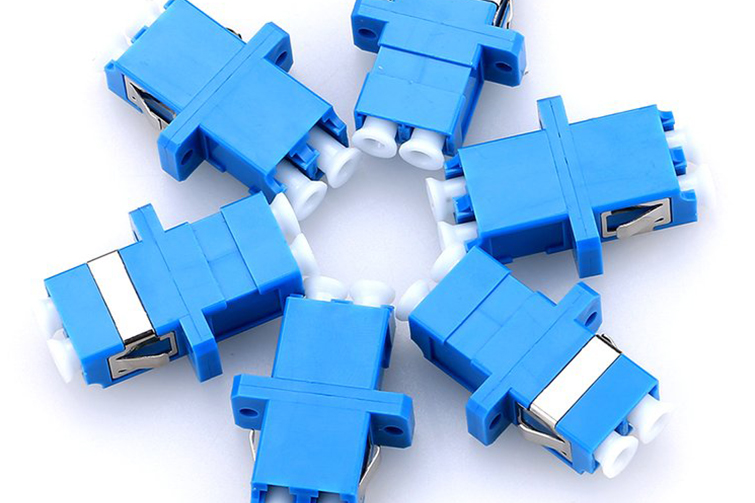
- Simplex and Duplex: Available for single fiber (simplex) or two-fiber (duplex) connections.
- Hybrid or Inter-Mating Adapters: These allow connection between dissimilar connector types (e.g., LC to SC, SC to FC), providing crucial flexibility for network migration, equipment interconnection, and testing. The adapter has a different interface type on each side.
5. Broad Compatibility and Standard Compliance
High-quality adapters are manufactured to strict international standards (IEC, TIA/EIA, JIS).
- This ensures universal compatibility with connectors from all major manufacturers, guaranteeing reliable performance regardless of the brand of connector used. Consistent dimensional accuracy is paramount for this interoperability.
6. Environmental Robustness
Adapters must perform reliably under various operating conditions.
- Temperature Stability: They should function across a wide temperature range (typically -40°C to +85°C) without physical deformation or performance degradation, thanks to the thermal stability of materials like zirconia ceramic.
- Dust and Moisture Resistance: Many adapters come with shutters or dust caps to protect the精密对齐套管 from contamination when not in use, which is vital for maintaining low loss.
7. Application-Specific Designs
Adapters are tailored for various installation scenarios:
- Panel Mount: Designed to snap into or screw into patch panels, enclosures, and wall plates.
- Bare Adapter: A standalone unit often used in testing or field installations.
- Flange Mount or Snap-In: For easy installation into different types of equipment and hardware.
- High-Density Designs: Such as small-form-factor LC duplex adapters, which are essential for maximizing port density in modern data centers.
Conclusion
In summary, fiber optic adapters are deceptively sophisticated components whose characteristics—precision alignment, low loss, high return loss, durability, versatility, and environmental stability—directly determine the reliability, efficiency, and scalability of an optical network. Selecting adapters that excel in these characteristics, like those offered by manufacturers such as Chengdu Fox Essential Materials, is a fundamental step in building a robust and high-performance fiber optic infrastructure. They are the essential, high-precision interfaces that ensure light signals transition seamlessly from one link to the next.
Related Posts
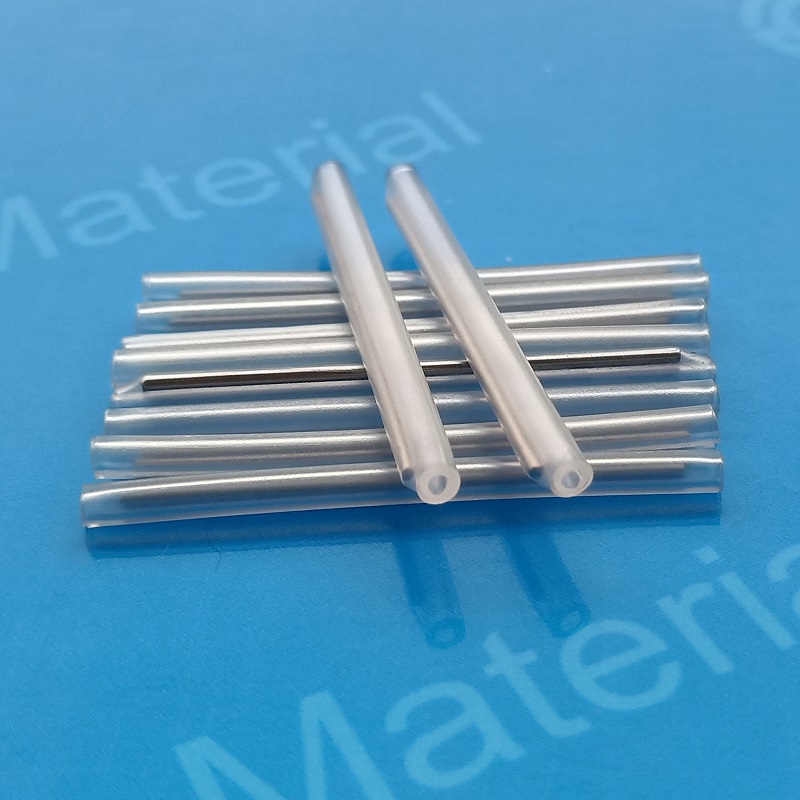
What is a fiber splice protection sleeve?
Jua 30, 2021